13.4°
13.4°

Morgantina. La storia e i resti di un’antica città di Sicilia
Morgantina. La storia e i resti di un’antica città di Siciliaby Silvio Raffiotta Sottolineare l'importanza di Morgantina nella storia dell'archeologia siciliana può sembrare superfluo.È l'unica città...
 EnnaVivi
Morgantina. La storia e i resti di un’antica città di Sicilia
by Silvio Raffiotta
È l'unica città dell'interno della Sicilia che sia venuta alla luce quasi per intero, fornendo una serie abbondantissima di reperti ed informazioni, che consentiranno di colmare lacune o pregiudizi ancora esistenti nella storia dell'isola. Ciò soprattutto per quanto concerne il rapporto di interazione tra la cultura indìgena e quella coloniale greca e punica, nonché il processo, non privo di momenti drammatici ed eroici per i vinti, che portò tutta la Sicilia in mano ai romani.
Ma gli scavi di Morgantina sanno offrire anche al profano il fascino di una scoperta e di uno spettacolo inimitabili, immergendolo d’un colpo in un'atmosfera di antiche e splendide civiltà, quando la Sicilia recitava da protagonista nel teatro del mondo occidentale.
Quest'opera, frutto dell'amore di chi è nato vicino alle sue rovine, con i limiti imposti da un tema ancora in parte inesplorato, ha lo scopo ambizioso, non di un lavoro scientifico, ma di far rivivere e parlare alla gente di oggi uomini e destini di duemila anni fa.
Come raggiungere Morgantina
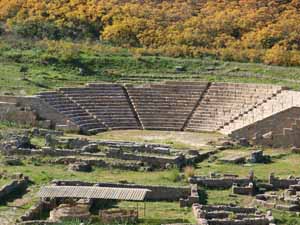
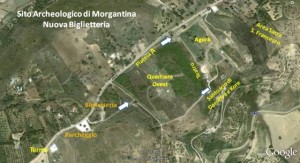
La zona archeologica di Morgantina occupa una area di oltre venti ettari e la visita richiede non meno di due ore. Se si dispone di poco tempo, ci si limiterà allo spazio delimitato dalla Soprintendenza, comprendente l'agorà e parte del circostante abitato domestico. Le altre emergenze, pur servite da sentieri, non sono visitabili senza una competente guida. È prevista la realizzazione di un «parco» con percorsi preordinati, pannelli informativi ed attrezzature ricettive turistiche.
Il sito e la sua storia
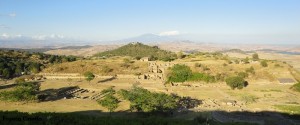
A 4 Km. da Aidone, verso levante, in contrada Serra Orlando, su un ondulato ed allungato pianoro, scosceso ai fianchi e culminante nel monte Cittadella (m. 578 s.l.m.), sono visibili gli imponenti resti della città siculo-ellenizzata di Morgantina. È raggiungibile percorrendo una carrozzabile, adeguatamente segnalata, che si biforca dalla SS. 288 e che conduce sin davanti al cancello d'ingresso degli scavi. Posto, quasi testa di ponte, a sbarramento della valle del Simeto e dei suoi tributari, il sito controlla una vastissima regione, delimitata dalle Madonie e dall'Etna a nord, dal mar Ionio ad est, dagli Erei meridionali a sud e ad ovest. Passaggio obbligato delle vie di comunicazione verso l'interno della Sicilia, per chi proviene dalla costa orientale, deve la sua fortuna alla fertilissima pianura, bagnata dal Gornalunga, che gli si stende ai piedi, e ai ricchi pascoli tra ombrose selve, che lo circondano alle spalle. La città fu portata alla luce nell'autunno del 1955 dalla missione archeologica dell'Università di Princeton e costituisce la testimonianza più significativa e completa di un popolo, il siculo, che prosperò nella Sicilia centro-orientale sin dall'XI secolo a.C. e che raggiunse le più alte espressioni con l'assorbimento della civiltà dei coloni greci, spintisi in quelle amene contrade a partire dal VI secolo a.C. Gli scavi sinora compiuti consentono di seguire l'intero sviluppo, dalla preistoria all'epoca romana, della comunità che ivi visse per poi, dopo oltre un millennio, scomparire. L'area in atto più facilmente visitabile, entro lo spazio delimitato con recinzione dalla Soprintendenza, risale ad un periodo ristretto della storia della città, che va dalla metà del V alla fine del I secolo a.C, i quattrocento anni cioè, nel corso dei quali Morgantina conobbe il suo massimo splendore. Ma la sua storia non è tutta e solo lì. Le tracce più antiche di frequentazione del sito appartengono alla prima età del bronzo (2100-1600 a.C), quando un popolo d'incerta e leggendaria origine occupò i terrazzi di San Francesco, una contrada a sud-est di Serra Orlando, per fondarne un villaggio di capanne circolari e rettangolari. Vissuti nell'alveo di quella cultura preistorica siciliana denominata castellucciana, i primi abitanti di Morgantina denotano, dalle non poche testimonianze lasciateci, una elementare organizzazione civile, su base tribale, ed il possesso di rudimentali tecniche applicate sia all'artigianato domestico che all'agricoltura. Oltre cinque secoli passarono senza storia, sino a quando un'altra gente, proveniente dall'Italia centrale, varcando lo stretto, non scoprì l'isola, decidendo di prendervi dimora. Erano i Siculi che, intorno al 1000 a.C, emigrarono, ad ondate successive, nella Sicilia orientale, cacciandone gli indigeni, sospinti nella parte occidentale. Fu un gruppo di questa gente, guidato dal mitico re Morges, a fondare, nel lontano X secolo a.C, sulla conica collina della Cittadella, la città. Nacque così Morgantina, invidiata e contesa da quanti calcarono l'isola nel successivo millennio, e che percorse, ora nello splendore ora nella miseria e nell'umiliazione, la sua parabola di vita, sino a quando Roma non ne sterminò la stirpe, cancellandone financo il nome. Per oltre trecento anni i Morgeti pacificamente progredirono sulla Cittadella, integrandosi con le altre affini popolazioni dell'interno e raggiungendo grandi traguardi nell'arte ceramica — di chiara impronta italica — e nello sfruttamento agricolo della vasta pianura, che si stendeva ai loro piedi.
- -
To emphasize the importance of Morgantina in the history of Sicilian archaeology can seem superfluous. Morgantina remains the only city in inland Sicily that has been in large part explored, producing a very abundant series of artifacts and archaeological data which have filled gaps in our knowledge and altered interpretations of thè history of thè island.
Of particular importance is new evidence from Morgantina for the interaction of thè indigenous Sikel culture with thè colonial Greek world of thè coastal cities, and for thè historical process that brought Sicily into the hands of the Romans, not without dramatic and even heroic moments for thè defeated population.
But the exploration of Morgantina can also offèr the interested public thè pleasures of discovery and of unexpected historical vistas, in thè fascinating ambience of the ancient and remarkable civilizations of Sicily, during times when thè island was a protagonist on thè stage of western history.
The present work is fruit of thè love for Morgantina of one who was born near its ruins. Within the limits imposed by a theme that is stili only partially explored, it has the ambitious aim, not so much of a scholarly work, as of one that will make thè destinies of two thousand and more years ago live again and speak to thè present day.
How to rea eh Morgantina
Morgantina is located near thè medieval town of Aidone, which is situated on a high peak in thè Heraian hills at an altitude of 850 m., in the province of Enna. The province possesses several outstantning attractions and monuments, including the lake of Pergusa, the Norman and Hohenstaufen castles at Enna, and thè extraordinary late Roman villa at Casale near Piazza Armerina. The province also offers the tourist the color and beauty ofa rural landscape that has changed little since antiquity.
The visitor coming from Catania can reach Aidone by either mute 288 or the autostrada Palermo-Catania; in the latter case one should take the Mulinello exit to Valguarnera and then thè modern road for Piazza Armerina, turning left for Aidone at the Bellia crossroads. Aidone can also be reached from Enna by following route 561 to the Ramata crossroads, turning left for Aidone. Piazza Armerina is the largest nearby town, about ten km. distant on thè continuation of route 288.
The excavations occupy an area of more than 20 hectares and the visit normally requires ca two hours. If time is limited the visitor can tour the agora (or centrai area) and thè residential quarter of the East Hil1. Although other outlying parts of thè site are accessible by paths, a guide is recom-m end ed for them. An archaeological park at Morgantina, with markeditineraries, illustrative panels, and other facilitìes, is planned.
The site and its history
Four km. east of Aidone are the extensive and well-preserved remains of the ancient city of Morgantina, situatedon thè Serra Orlando ridge. The site of thè city takes the form of a long narrow plateau with steep flanks, culminating in the conical hill of Monte Cittadella (alt. 578 m.). Leaving Aidone on ss. 288 for Raddusa and Catania, the visitor turns left at 2 km. on a smaller paved road, to reach on the right after 1.5 km. thè entrance to thè excavations, which are stili in progress. The site of Morgantina forms the keystone, as it were, of the great valley of the Simaithos (the modern Simeto) and its tributaries; it controlied an extensive territory delimited by the Madonie mountains and Etna to the north, by the valley of Catania to the east, and by the Heraian hills to the southeast and west. The site overlooks a major communications mute running from the east coast to the interior, and it owed its fortune to thè fertile farmlands that He at its feet, watered by the Gornalunga river, and to the rich pasture lands, interspers-ed with shady forests, that He at its back to the southwest. Excavations conducted by Princeton University began at Morgantina in thè autumn of 1955. Today, after twenty seasons, Morgantina offers an extensive and thorough archaeological documentation of the Sikels, the people who dominated east-central Sicily from thè ninth century B. C. The highest lèvel of prosperity carne after the absorbtion into the population of Greeks from the coastal colonies, who first arrived in the area towards the middle of the sixth century B.C. The excavations allow us to follow the development of the city for more than a millennium, from prehistoric times to the early Roman empire, when urban settlement died out. The part of the city most accessible to visitors lies withinthe metal fence maintained by the superìntendency of Antiquities; the settlement here belongs to the la ter phase in the overall history of the site, commencing in the mid-fifth century B. C. and surviving until the abandonment five hundred years later. The high point in this period was the third century B. C., when the city reached its moment of greatest splendor. Yet Morgantina 's history had begun much earlier. The oldest settlement discovered thus far belongs to the Early Bronze Age (2100-1600 B. C.), when a group of farmers and shepherds 13 lived on thè S. Francesco plateau, in a village of round and rectangular huts. Typical of the prehistoric Castelluccio culture, widespread in centrai and eastern Sicily, this first settlement has left traces of an elementary tribal organization. A variety of artifacts used in domestic crafts and agriculture has been found. For five centuries after the abandonment of the Castelluccio village the site of Morgantina seems not to have been inhabited. Around 1000 B. C. the Sikels, an Italie people, crossed the straits of Messina in successive migrations and settled in eastern Sicily, pushing the previous inhabitants into the western part of the island. The Morgetians, who formed one of the various linguistic groups under the generai Sikel heading, setti ed on the conical hill of Cittadella, and called the new center Morgantina after themselves. According to later Greek historians the Morgetians were led by King Morges. Thus was born Morgantina, envy of most of the protagonists of the later history of the island. The city would live for a thousand years, sometimes in prosperity, sometimes in poverty and humiliation, until finally Rome snuffed out its life and caused even its name to be forgotten. For more than three hundred years thè Morgetians lived peacefully at Cittadella, integrati ng themselves into the agricultural economy of their neighbors. In this early ohase, the Morgetians attained notable achievements in the art of pottery-making, as oan be seen in the Aidone museum; many of the vases have a distinct Italie imprint, bespeaking the origins of Morgetians on the continent. The extensive and fertile valleys surrounding thè town gave ìt a prosperous agri cui turai economy. In the second half of the eighth century B.C. the Greeks began to found colonies along the Sicilian coast. This most ìngenious and progressive of the Mediterranean peoples was thus responsible for thè foundation of Syracuse, Catania, Gela, Ka marina, and Agrigento, as wellas othercities. In their relentless politicai and commerciai expansion the Greeks did not ignore the Sikels of the interior. In some cases the Sikels became their subjects; in others, where resistance was met, the two peoples lived in relative peace. The descendants of Odysseus arrived relatively late at Morgantina. Towards the middle of the sixth century B. C. a group of Chalcidian Greeks from the eastern coast, searching for new agricultural lands and commerciai outlets, ascended the valley of the Simaithos and established themselves in the city of Morgantina. Although their relations with the native Sikels or Morgetians were not entirely peaceful, at the same time there were opportunitìes for a repiprocity of exchanges. The simple rough Sikel farmer submitted to the fascination of the refi ned and imagi native Greek, from him learning of a higher standard of living as well as of a more advanced technology. The way was set for a slow but steady process of fusion, the synthesis, as it were, ofstrength and beauty. But in the sixth century and for the next one hundred years the two peoples were to a certa in extent adversaries and no one would have forgotten that thè Greeks, whether Doric or Chalcidian, had come to exploit the land, and not to spread the benefits of Hellenism. In the later 460's B.C. the Sikel communities of central Sicily formed a league to free themselves from the yoke of tyranny imposed upon them by the Greek oligarchs of Syracuse and Gela. The e harismatic leader of the Sikels was Douketios of Menai (ca 500-440 B.C.). The struggle in its first phase saw democratic Greeks fighting side by side with the Sikels. One of Douketios's early accomplishments was thè capture in 459 B. C. of Morgantina, which must then have been in the hands of Greek oligarchs or of a Greek tyrant. Archaeology has shown that thè old city at Cittadella was abandoned at about this ti me, surely as a consequence of Douketios's arrival. At the sa me moment there a rose on the neighboring ridge of Serra Orlando the second city of Morgantina, and it too must have been a produet of Douketios's presence. Laid out on a grid-plan that offered equal shares in the polity to all-comers, the new city has a distinctly democratic character. To the years after 459 B. C. we attribute the first coin produced by the mint of Morgantina, a small silver litra hearing the head of a bearded man and an ear of grain; the male head is perhaps Zeus Aitnaios of the Sikels, a reference then to the foundation of thè new polis or city. The dream of Douketios lasted but a decade, and his defeat in 450 left Sicily much as before. Morgantina was now in the sphere of Syracuse, the most powerful city in the island. Later in the century, in 424 B.C., Morgantina was bartered by her new masters to Kamarina, in exchange for a sum of money. This is one of the darkest periods in thè city's history, during which there are few traces of civic or artistic achievement. This is also the era of the great wars in Sicily between Athenians and Syracusans, and later between the Greek city and the Carthaginians. These wars devastated the island, and the Sikels and Greeks of the interior felt their effects, forced as they were into un certa in alliances now with one, now with the other contender. In 396 Dionysios of Syracuse captured Morgantìna during one of his campaigns to extend Syracusan power to the centrai part of the island. Like most of thè Sicilian cities Morgantìna felt the consequeqces of the extended politicai and economie crisis that followed Dionysios's death in 367 B. C. At the nadir of this crisis in 344 B.C. the Corinthian commander Timoleon landed at Taormina, summoned by the Sicilians to reestablish liberty and democracy in the island. Within a few years Timoleon had freed both the island from the Carthaginian menace and many cities from their locai tyrants. He evidently gave Morgantìna her autonomy once more and renewed her traditions of culture and civilizatión. After this time the city was ringed by a new defensive wall, the old city pian was extended; commerciai activity revived and with it the city's mint, which now produced three series of bronze coins hearing the city's name; the cult of the two goddesses Demeter and Persephone was renewed, and their sanctuaries sprang up both in thè agora and in the residential quarters. These were peaceful and prosperous years, when Morgantìna like the rest of Sicily matured and completed the fusion of the separate Greek and Sikel traditions; and from this union there sprang a new people with a common culture and a common destiny to defend. In 317 B.C. the military leader Agathokles called upon the citizens of Morgantina to help him free Syracuse, which had fai le n into the control of oligarchie factions. Agathokles succeeded in the attempi, prodaimed himself king, and laterseemingly bestowed favors and privileges on Morgantina, in return for the assistance he had received. Our city reached the apex of its development only in the third century B.C. Just before the island fell irrevocably into the hands of Rome, Syracuse was ruled by the finest politician of her history. In his long and just reign of sixty years King Hieron II conceived and realized the idea of unifying the cities of the southern half of the island in a single great kingdom with its capitai at Syracuse. Morgantina as we see it today is the city of Hieron II. During this time the population grew to perhaps 10,000, with most of the space within the circuii of walls (length ca. 7 km) occupied by houses. The centrai square or agora was embellished with porticoes on three sides, and the residential quarters included large houses of as many as 500 square meters, with numerous mosaic pavements. The extensive agricultural production of cereals was exported widely, and the robust wine produced by the city's vineyards was known even on the continent. But drums of war resounded again menacingly in the island. Al ready as early as 264 Rome had intervened in Sicilian affairs, in her first confiict with Carthage. The con test was now forpredominance over the entire western Mediterranean. King Hieron II recognized the danger; and so Syracuse and the other cities of his kingdom, Morgantina included, joined in alliance with Rome. Peace was assured as long as the alliance lasted. In twenty years of war Carthage was humilia ted and driven from the island; and the western half of the island thus became thè Roman province of Sicily. Now there only remained a pretext for the Roman annexation of the other half. In 215 Hieron II died. The previous year Rome had suffered a significant defeat at Cannae at the hands of the Carthaginian commander Hannibal. Thus it was that after Hieron 's death thè free cities of his realm threw over the Roman alliance to join thè Carthaginians in the illusion of saving themselves from the fate al ready predicted by recent history. Morgantina was among these cities and subsequently became a strategie supply center for the new Greek-Carthaginian alliance. As it turned out the conflict wouid in factbe finaiiy resoived in the Sicilian uplands. Syracuse fell to the Romans in 212 B. C. and other cities then surrendered, though not Morgantina. The following year Rome sent new legions under thè command of Marcus Cornelius Cethegus, who advanced into the interior and besieged Morgantina. The city feti, evidently after a long siege. Morgantina was harshly punished. Her territory was presented to thè Spanish mercenary capta in Moericus, who earlier had been in Greek ser-vice. Betraying Syracuse to the Romans, he assured their eventual conquest of Sicily. Morgantina was his reward. At this point began the decliine of Morgantina. The surviving Greek population was proba bly sold into slavery; the farmlands were reassig ned to the illiterate Spanish mercenaries; the fortifications went out of use; the residential quarter was reduced to one-third the area occupied before 211 B.C.; end the agora, from a cultural and political center of free citizens became instead merely an enormous market piace. The old Greek gymnasium was transformed into shops, while at the heart of the agora a great aitar, sacred to one of the Greek gods, was incorporated into a market building. Outside the city the rural farms of the citizens were subsumed into the great independent estates (latifundia) owned by absentee landlords and worked by great numbers of slaves; in the city thè new emerg-ing social class was mercantile. Morgantina survived in part as an active commerciai center, as thè numerous series ofbronze coins minted by the Spanish mercenaries so clearly indicate. Two centuries of Roman rule left Morgantina almost without a history, even as the island of Sicily itself ceased to be a pro-tagonist in the centrai Mediterranean. Sicily was reduced to the status of a municipal granary for the Roman people, and the old free cities were replaced by the new masses of slave labor. But the slaves are almost invisible to the historian, except when they organile themselves in re volt and endanger their masters. In the two fierce slave revolts of 139-133 and 104-101 B.C., Rome was constrained by the great numbers of slaves up in arms to send her legions to put an end to thè disturbances. Diodorus records that Eunus, the Syrian slave who led the revolt of 139-133, was imprisoned and died at Morgantina. In the course of the first century B.C. thè historical record is meagre. Cicero describes the depredations of the Roman governor Gaius Verres, which included mistreatment of citizens of Morgantina; and at the end of thè century the geographer Strabo declares that Morgantina no Iònger exists as a city. The excavations ha ve shown that the city may ha ve been demaged in thè 30's B. C, and that thereafter there was a slow decline. The last exiguous signs of occupation belong to the second half of the first century of our era. The city's final decline may be the consequence of its involvement in the military conflict in 36 B.C. between Octavian, soon to become the emperor Augustus, and Sextus Pompey, the republican son of Pompey the Great. Sextus offered freedom to the Sicilian cities that took up his cause. Those that didso chose badly and so suffered when Sextus was defeated; populations were deported and new Roman colonists settled in their piace. Morgantina may well have been one of these cities. It may thus have been that in a vain effort to throw off thè weight of Rome the thousand-year history of the city carne to a final conclusion. The successive centuries covered the city with an earthen blanket that would protect it almost intact for posterity. Unfortunately this protective mantle has been violated not only by archaeologists but also by clandestine looters. With more effective and vigilant policies of conservation, the ruins of this ‘Sicilian Pompeii’, as it has been called, might indeed have emerged from the ashes of the past in far better circumstances than is actually the case, because of the conti-nuing problem of clandestine exploitation. No other Sicilian city — not great Syracuse or mighty Agrigento — was ever so ‘legible’ for scholars in its entirety or so accessible in its public, private, and sacred aspects for the interested sightseer. What the archaeologist has brought to tight is only a part of the whole that could have been restored to history and scholarship, but even so it is enough to give the visitor a perspective on the society and culture of centrai Sicily of two thousand years ago.